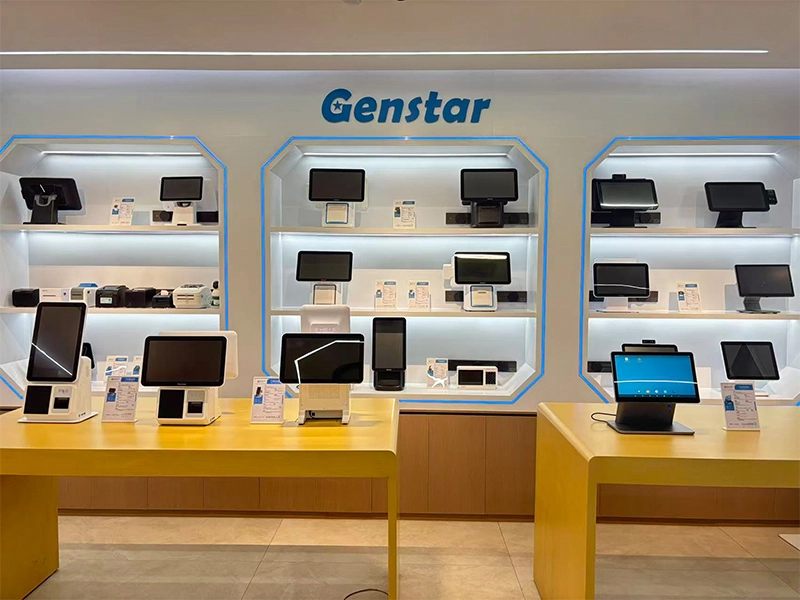
Commercial POS terminals paired with high-speed barcode scanners enable fast and accurate checkout by quickly reading various product barcodes, making them ideal for peak-hour traffic. Receipt printers generate transaction receipts instantly, while seamless integration with the store inventory system automatically updates stock levels after each sale. The solution supports membership programs, loyalty points, promotional discounts, cash payments, and multiple digital payment methods, simplifying daily reconciliation and significantly improving checkout efficiency and store management.
The essence of new catering lies in leveraging intelligent hardware, the internet, and big data to restructure people, products, and operational scenarios within the food service industry.
1. Pain Points in the New Catering Era
The traditional catering industry has now entered the era of smart and digitalized dining. The new catering model explores how internet technologies, products, and data capabilities can help offline businesses transform their operations and achieve intelligent upgrades. At its core, it relies on smart hardware, software systems, internet connectivity, and big data to reshape the “people–product–place” relationship. Improving customer experience, enhancing operational efficiency, and adapting to new consumption scenarios have become urgent challenges for traditional restaurants.
In summary, key pain points include:
(1) High labor costs when operating a restaurant;
(2) Traditional paper menus result in slow and inefficient ordering;
(3) Long waiting times during peak hours lead to customer loss;
(4) Multiple food delivery platforms make management complex;
(5) Excessive kitchen orders without proper coordination slow down dish preparation and affect customer experience;
(6) Multiple store locations make backend data management difficult.
In response to these challenges, Genstar Technology has introduced a smart catering solution to help traditional restaurants innovate their business models and complete their transformation toward intelligent operations.
2. Smart Catering Industry Solutions
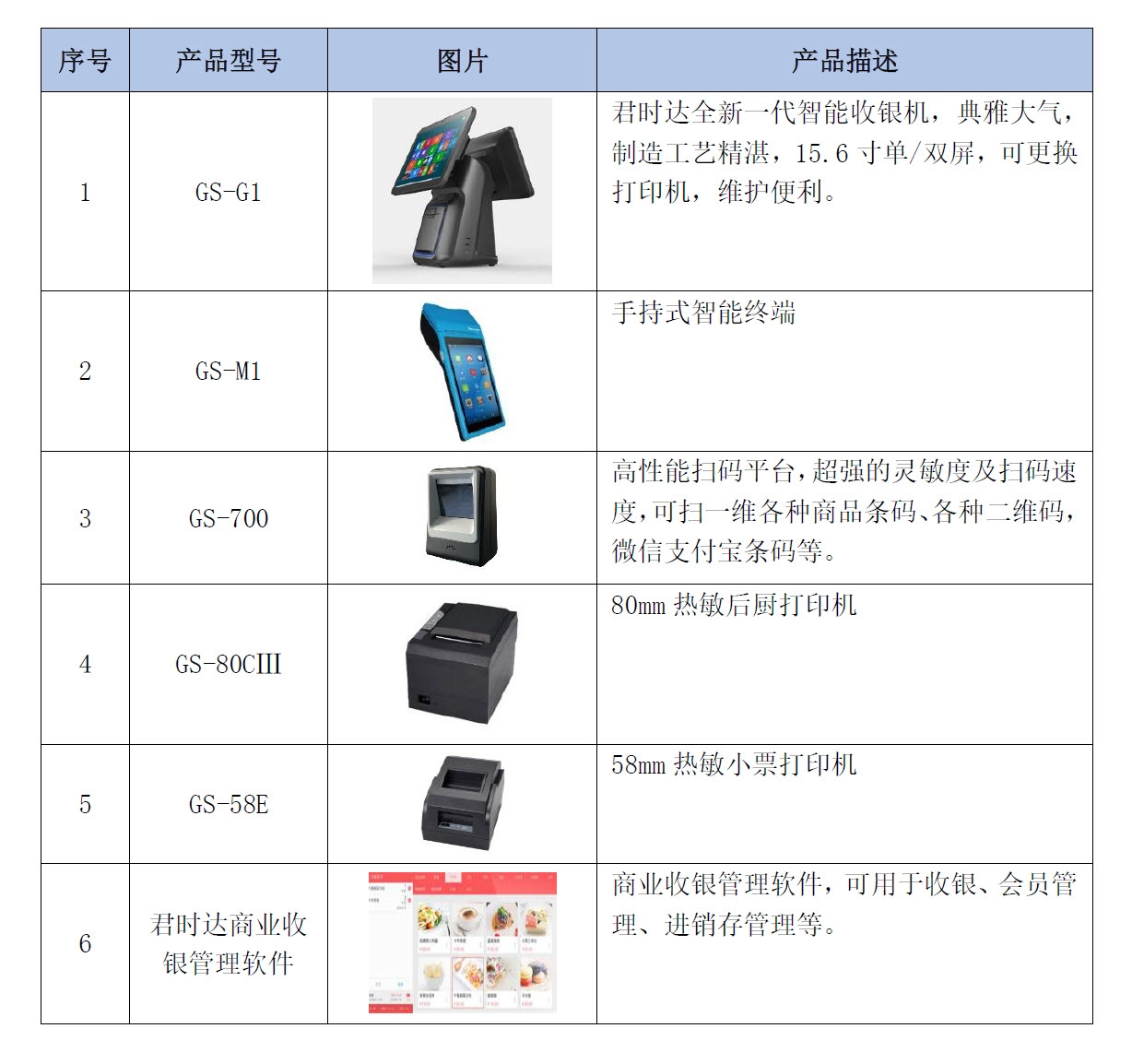
Genstar Technology provides optimized smart catering solutions, offering a range of products and services tailored to the needs of modern restaurant operators.
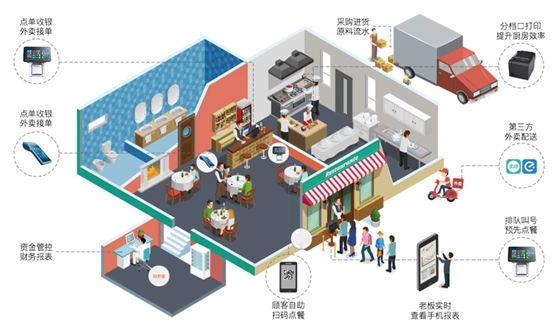
3. Smart Restaurant Application Scenarios
Typical implementation scenarios include:
-
During peak dining hours, customers can use the GS-G1 device outside the restaurant to take queue numbers, while staff use the GS-M1 to manage and call waiting customers;
-
In the dining area, staff use GS-M1 for ordering, or customers can scan QR codes to place orders; meanwhile, the kitchen receives synchronized tickets via the GS-80CⅢ 80mm thermal printer, allowing chefs to prepare dishes efficiently, and waitstaff serve accordingly;
-
When a takeaway order notification is received, staff confirm the order using GS-M1 and print the takeaway receipt directly;
-
When customers finish dining and proceed to checkout, the system displays the bill, and customers simply present their payment QR code to complete the transaction via the GS-700 scanner;
-
After payment, customers leave the restaurant with a satisfying dining experience.